A puddle by the washer is easy to mop up and ignore. It is also how subfloors rot and mold gets started behind the machine. Finding where the water is actually coming from is the first step, and it is not always obvious.
Leaks that show up during fill
If water appears while the machine is filling, look at the hoses first. Rubber supply hoses crack and bulge with age. Check both ends, the fittings at the wall and at the back of the washer. The inlet valve inside the machine can also crack and drip from the moment the water turns on.
Leaks during the wash or spin
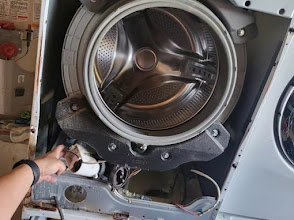
Water that appears during agitation or spin usually comes from inside the machine: a worn tub seal, a cracked outer tub, a loose or split hose between the tub and pump, or a failed drain pump. On front-loaders, a torn door boot is the most common cause and shows up as water at the front of the machine.
Leaks during drain
If the puddle appears when the machine empties, check the drain hose and the standpipe it drains into. A hose that has slipped out, a kinked hose, or a standpipe that is clogged and backing up all put water on the floor.
Overuse of detergent
Too much detergent in a high-efficiency washer makes suds that push out past the seals. If the puddle is soapy and the machine seems otherwise fine, cut the detergent in half and see if it stops.
Why it matters
Water under a washer sits. It soaks the subfloor, feeds mold, and on an upper floor it finds its way into the ceiling below. A leak that costs a little to fix today can cost thousands in repairs later. We find the actual source and fix it properly on top-load, front-load, and stacked units.
Need a hand with this?
Leaking washer, dryer that will not heat, or a load that never finishes. We fix top-load, front-load, and stacked units.
Washer & Dryer Repair in Chicago